Have The Guts to Be a Vulnerable Writer

When you’ve been guarded for way too long.
When I was five, I handed a pen and a notebook to my Mom.
“Hey Mom, I have a story. Can you write it down?” I asked her.
Then my Dad barged into the room, and he said:
“Why don’t you write the stories yourself?”
So with the terrible spelling of a five-year-old, I began writing.
And it was fun.
But there was something I didn’t know…
The years went by, and my hobby started to grow.
I wrote diaries. Blogs. Short stories. Traveling notebooks. Letters to my imaginary friend.
When the teacher asked, “Who do you wanna be when you grow up?”
I easily replied: “An author.”
I still didn’t know.
At fourteen, I’d been writing a novel.
I was eager to show it to my friend.
But it didn’t happen.
I backed off.
A toxic shame started to creep in. My writing had something, and I was afraid of that something. It soon started to dawn on me that…writing is a vulnerable activity.
In the words of William Zinsser: “Writing is an act of ego”.
Reflections, emotions, dreams, fears, insecurities…
My writing is all about me, but I don’t want others to perceive me. I don’t want them to judge me, to laugh at me, to roll their eyes at me, to hate me, or even to love me. I don’t want to be seen. That’s why I’m scared.
I finally knew.
By age sixteen, I stopped telling people.
When the teacher asked about our future careers, I wasn’t sure what to reply anymore.
But I kept writing.
If you do it secretly and online, that’s even worse. Maybe your social circle doesn’t know. But still, you’re willingly exposing yourself to strangers.
So let me ask you: Why?
Why are you publishing?
Why are you revealing your thoughts, if you fear it so much?
There must be a reason behind.
You Used To Be Vulnerable.
First, let’s define "vulnerable".
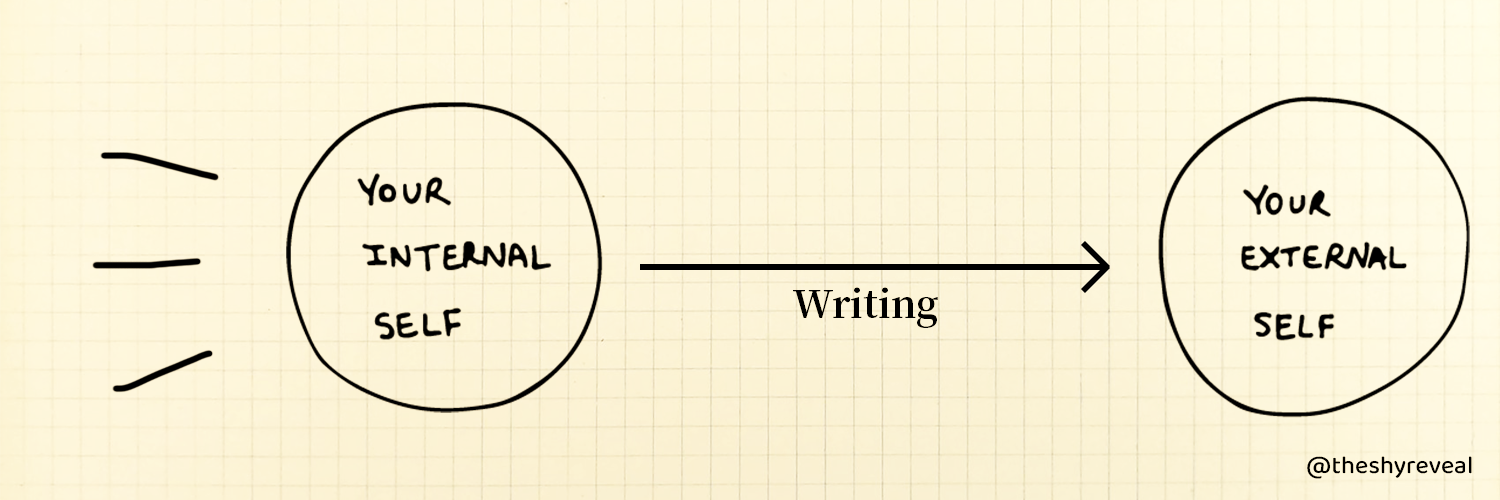
Imagine you’re made of two circles.
One is your internal self (your mind). The other is your external self (your appearance; what you show to the world).
Like this:
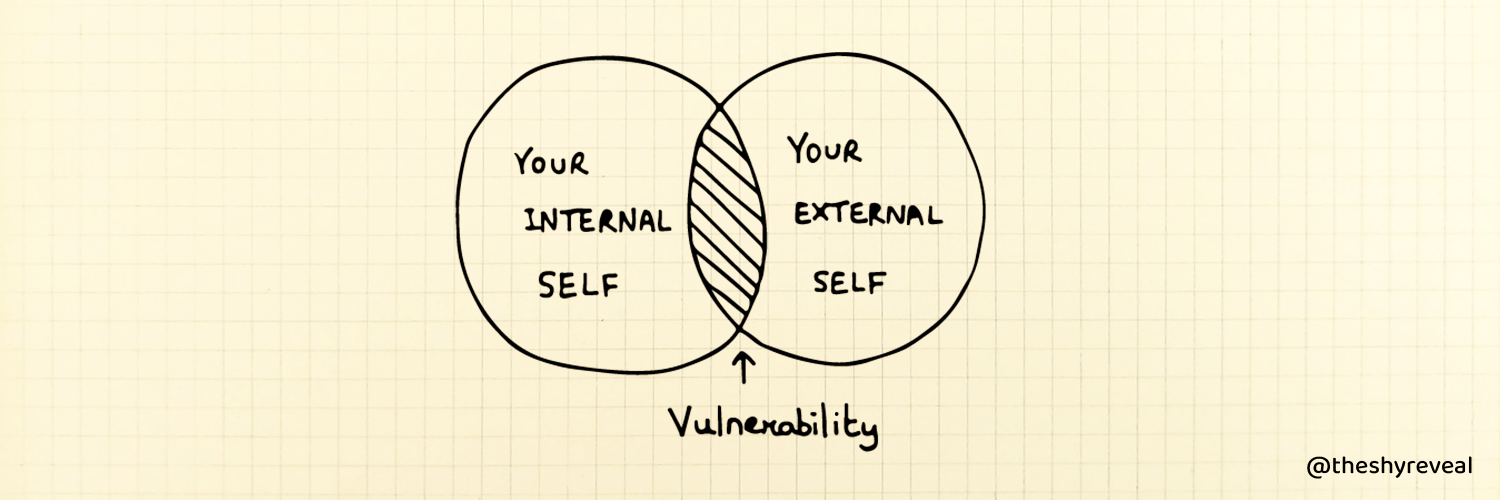
The closer the circles, the more vulnerable you feel.
The more authentic, spontaneous, and relaxed you are.
But also, the easier it is to hurt you.
Yes, you can be disliked, humiliated, called a weirdo, just because you’re being you. Who really wants to be vulnerable? Not many people.
You might even say: “I’m reserved, and I’ve always been that way.”
But what if we went back a few decades?
When you were a baby:
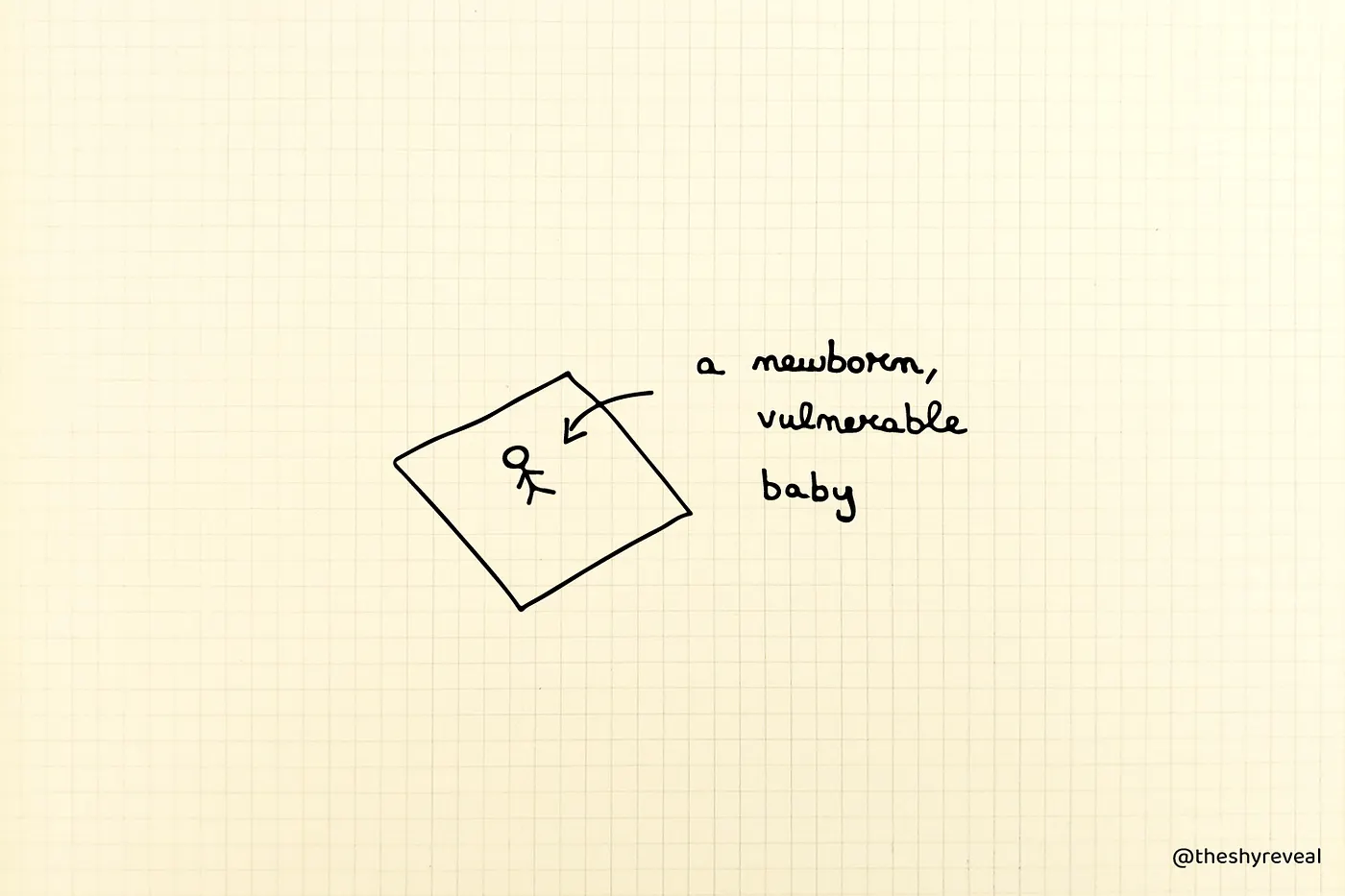
Babies are interesting. When they want to sleep, they sleep. When they want to cry, they cry. They don’t care about what people will think of them.
Babies are the masters of self-expression. And no one even taught them!
If you think you don’t know how to be vulnerable, remember that once upon a time, you were a baby too.
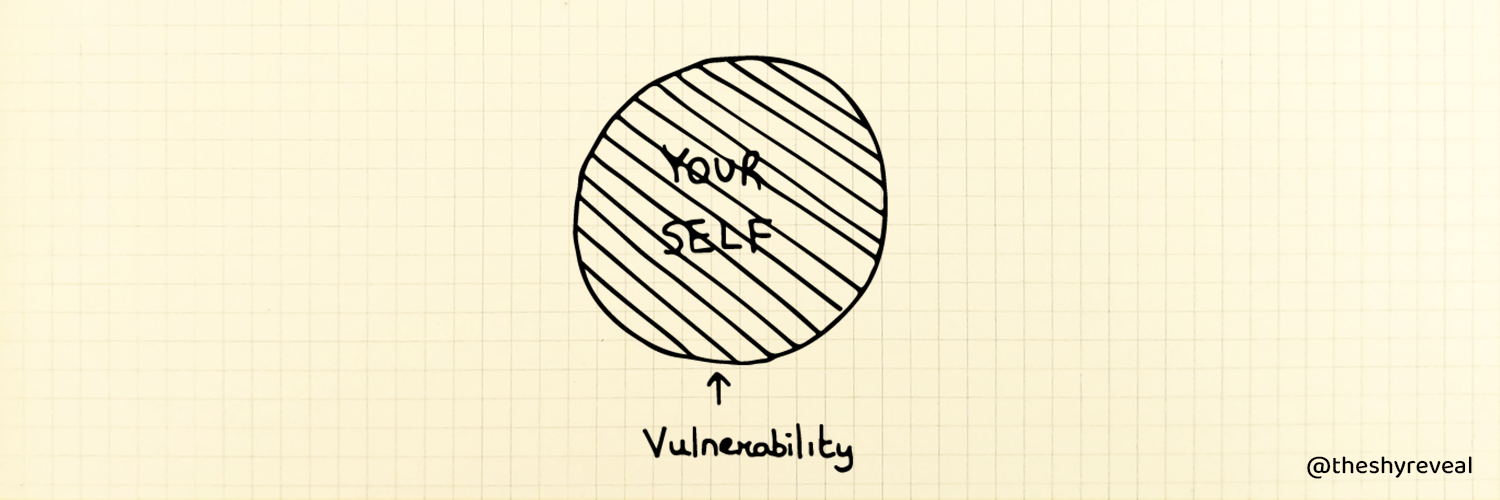
What happened then?
Babies can’t stay babies forever.
How are you gonna survive in a bitter world if you’re so small, feeble, and incompetent?
So you start wearing a mask.
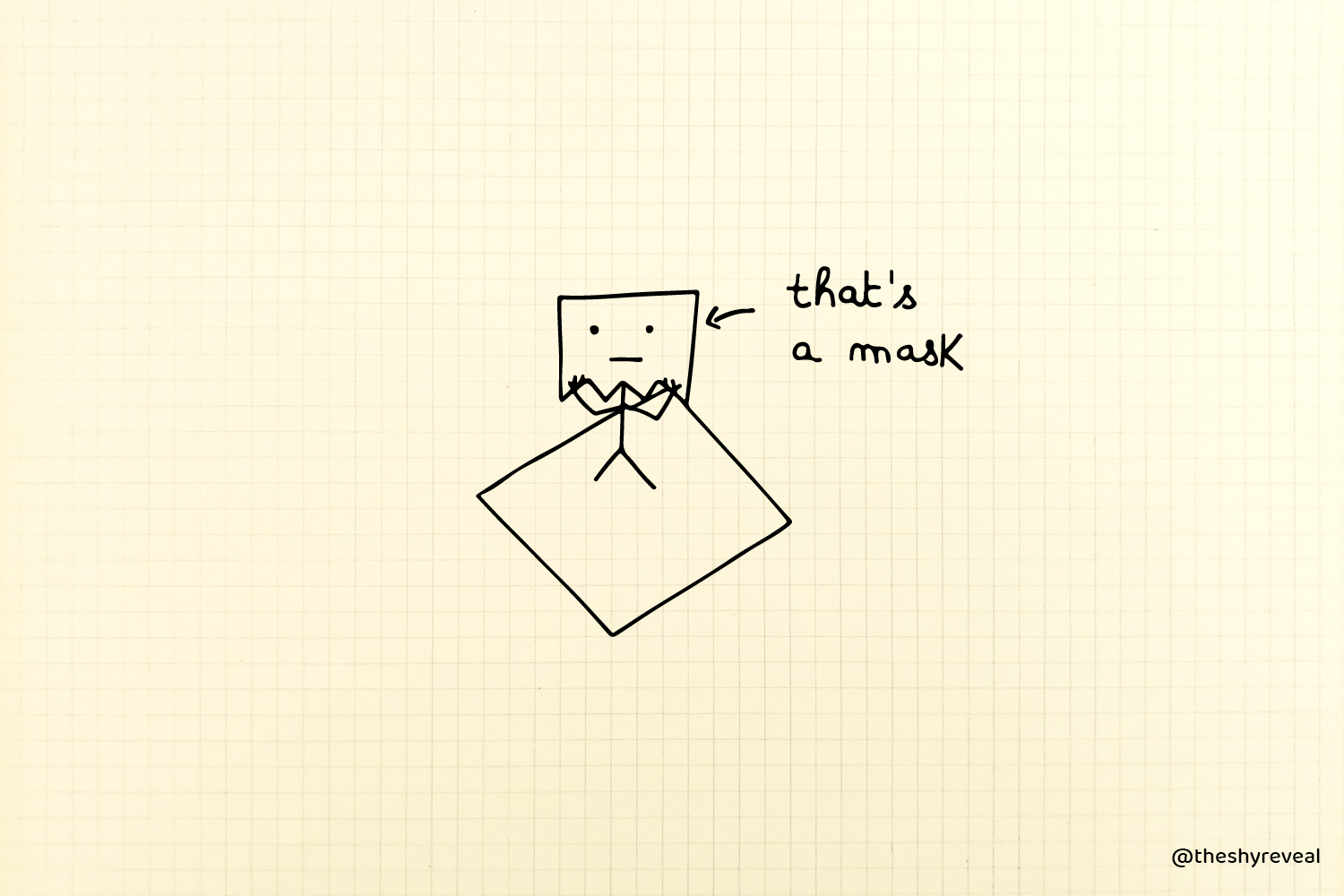
But deep inside, you know it’s not safe.
People can tell you’re wearing it. And if they’re bold enough, they can tear it off and say: “Ha! I know you’re still a baby!”
So you need more than a mask.
You need space.
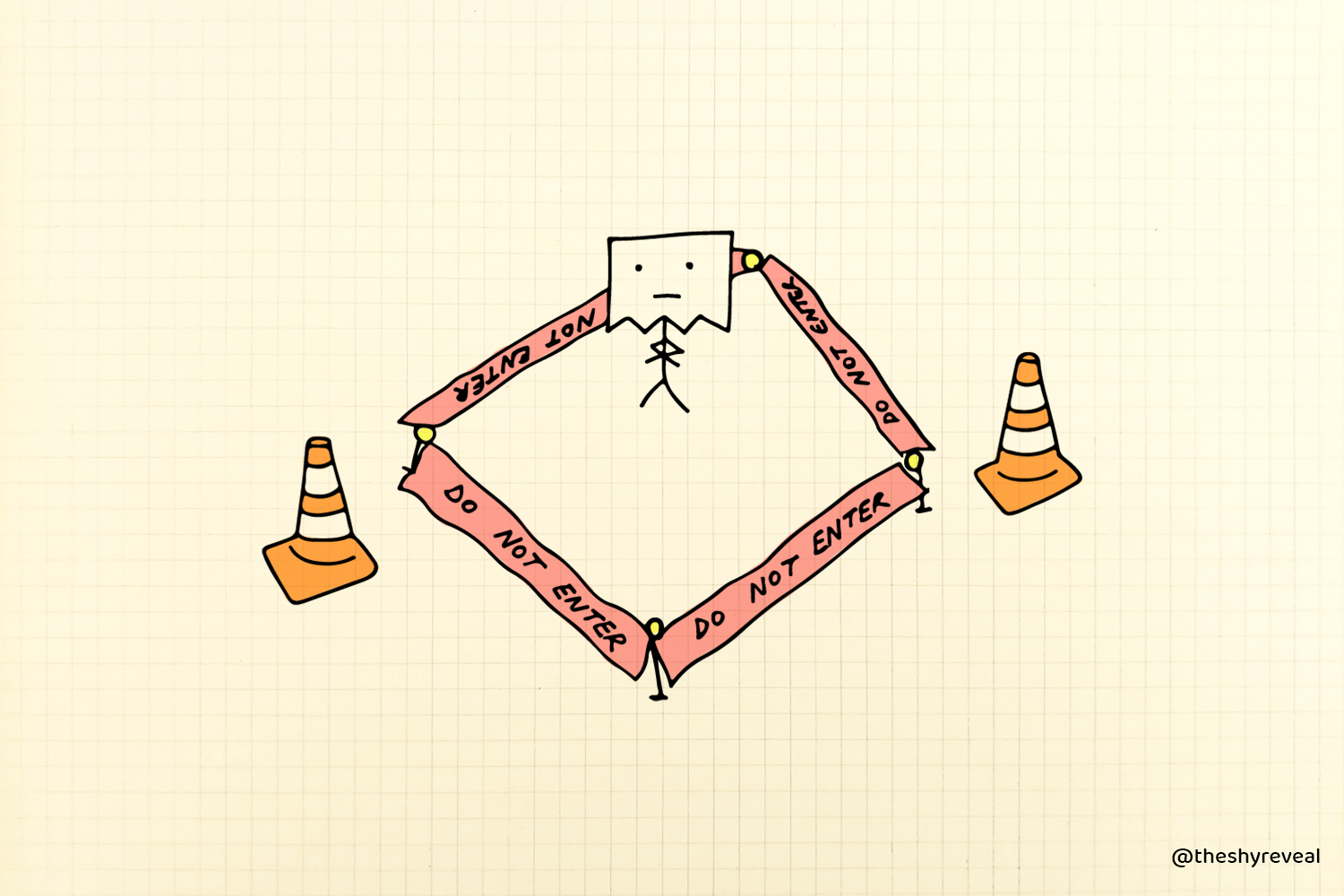
Great, you’re alone.
You’re an introvert. You like to think, daydream, play scenarios, and make jokes all by yourself. Actually, you’re super talkative (but only in your head).
The problem with space, though, is that it’s never enough. Eventually you need more, more and more. You’re paranoid that people can still suspect the baby that you truly are.
So you need walls.
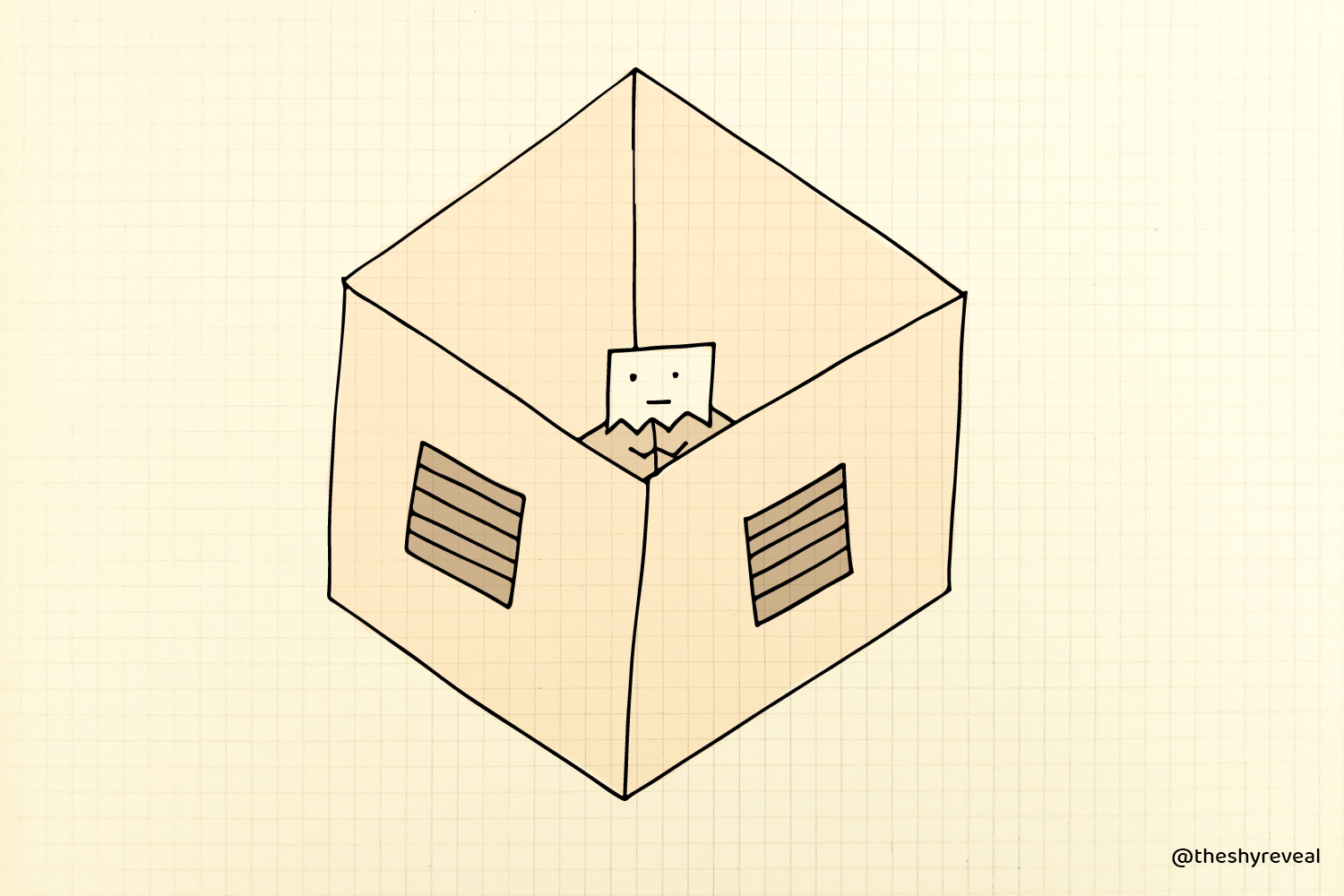
When you have walls, people can’t even see you.
But walls are fragile.
What you really need is a house.
A full-fledged, solid building with a roof and a closed garden.
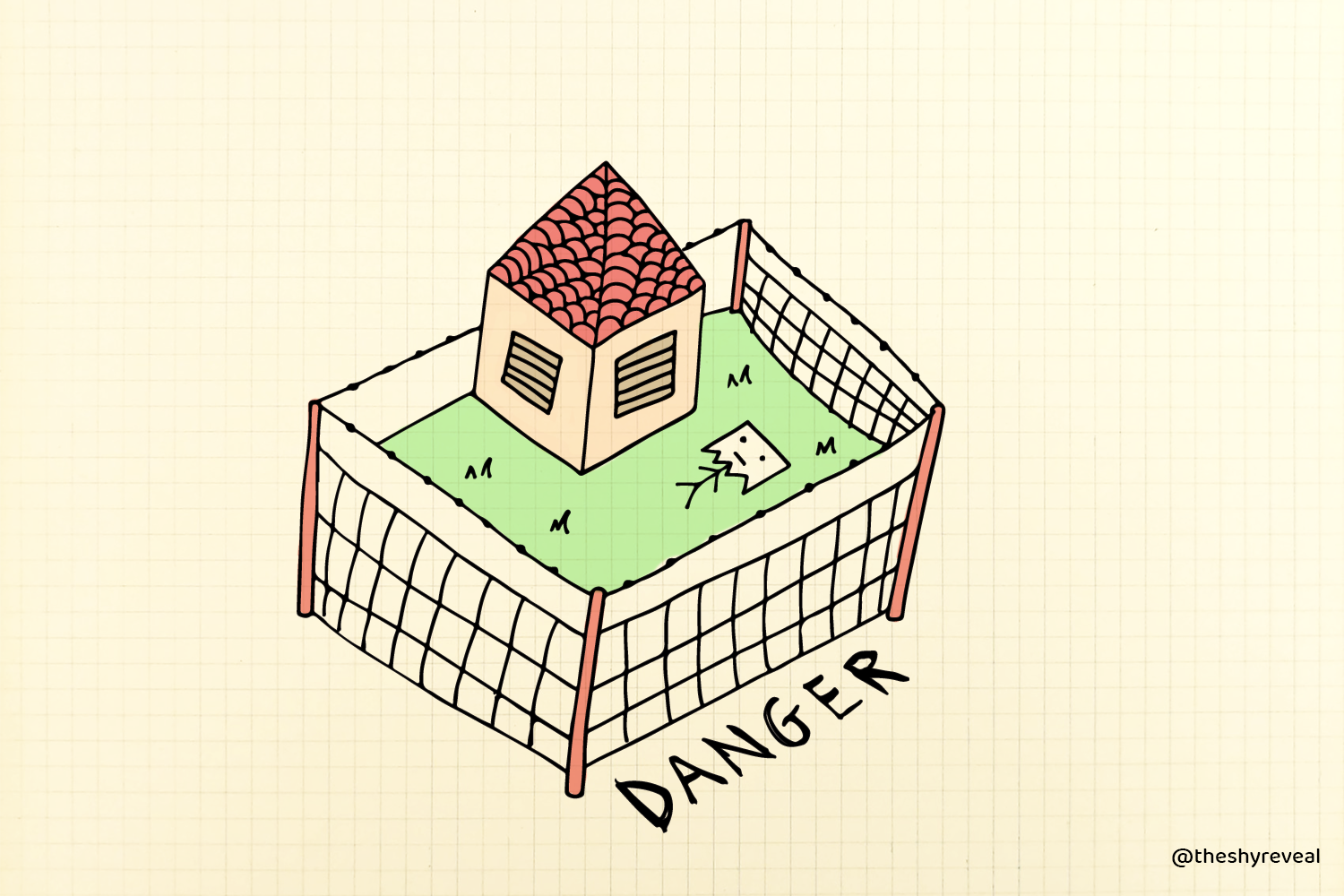
Well, actually, forget about a house.
You’d rather live in a tower.
A tall one, please.
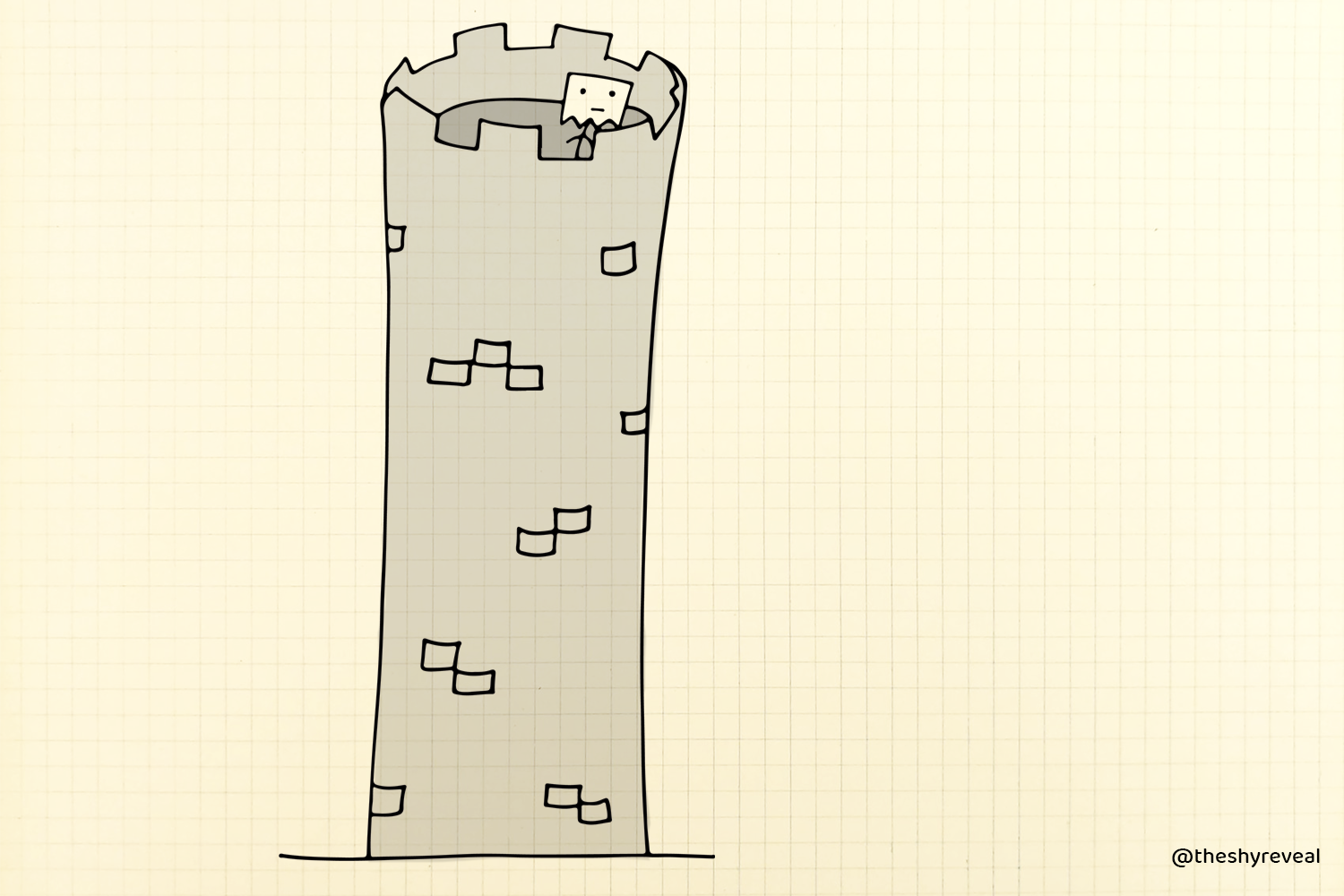
Now, let’s add some water.
So you can finally (finally!) be alone.
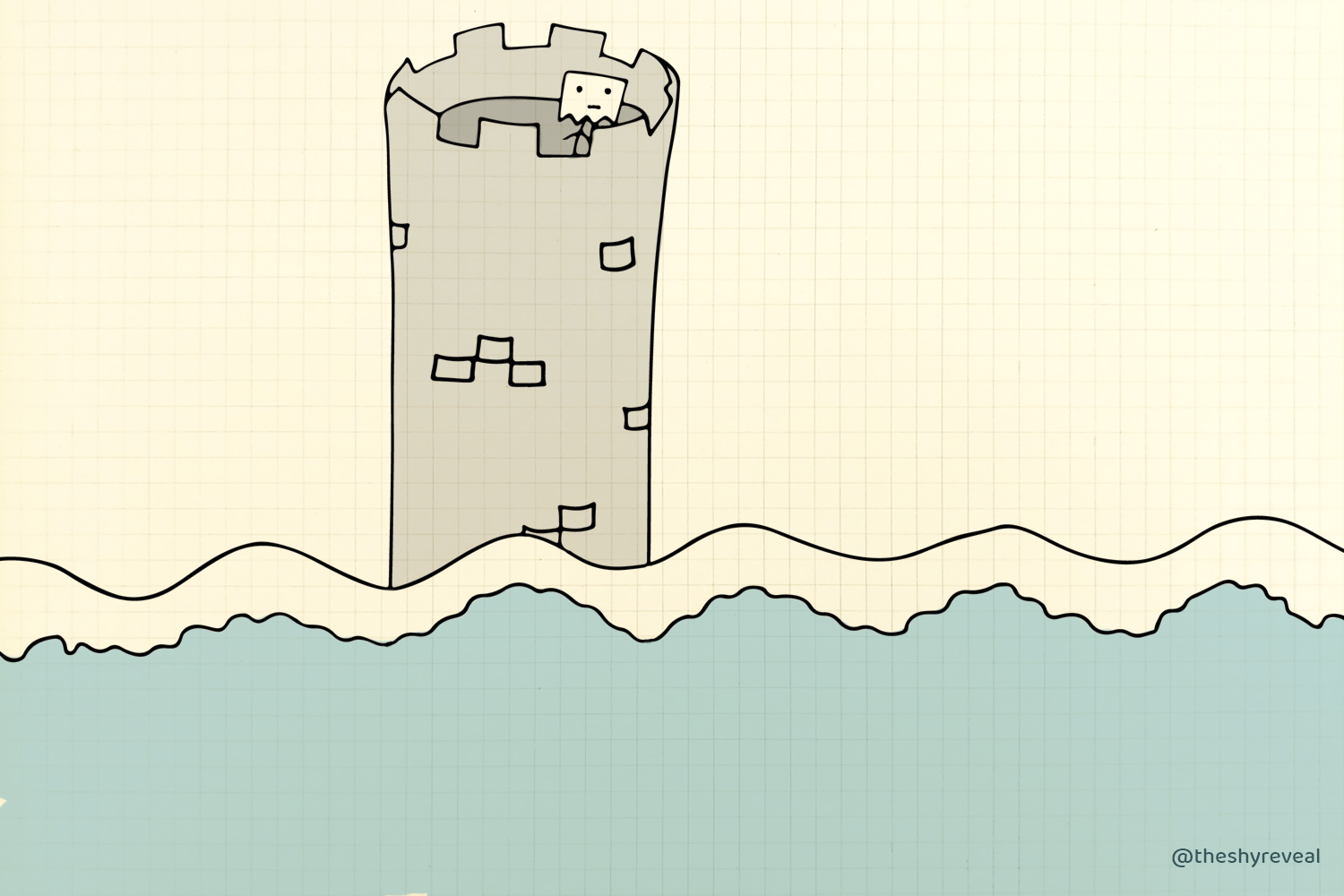
Forever.
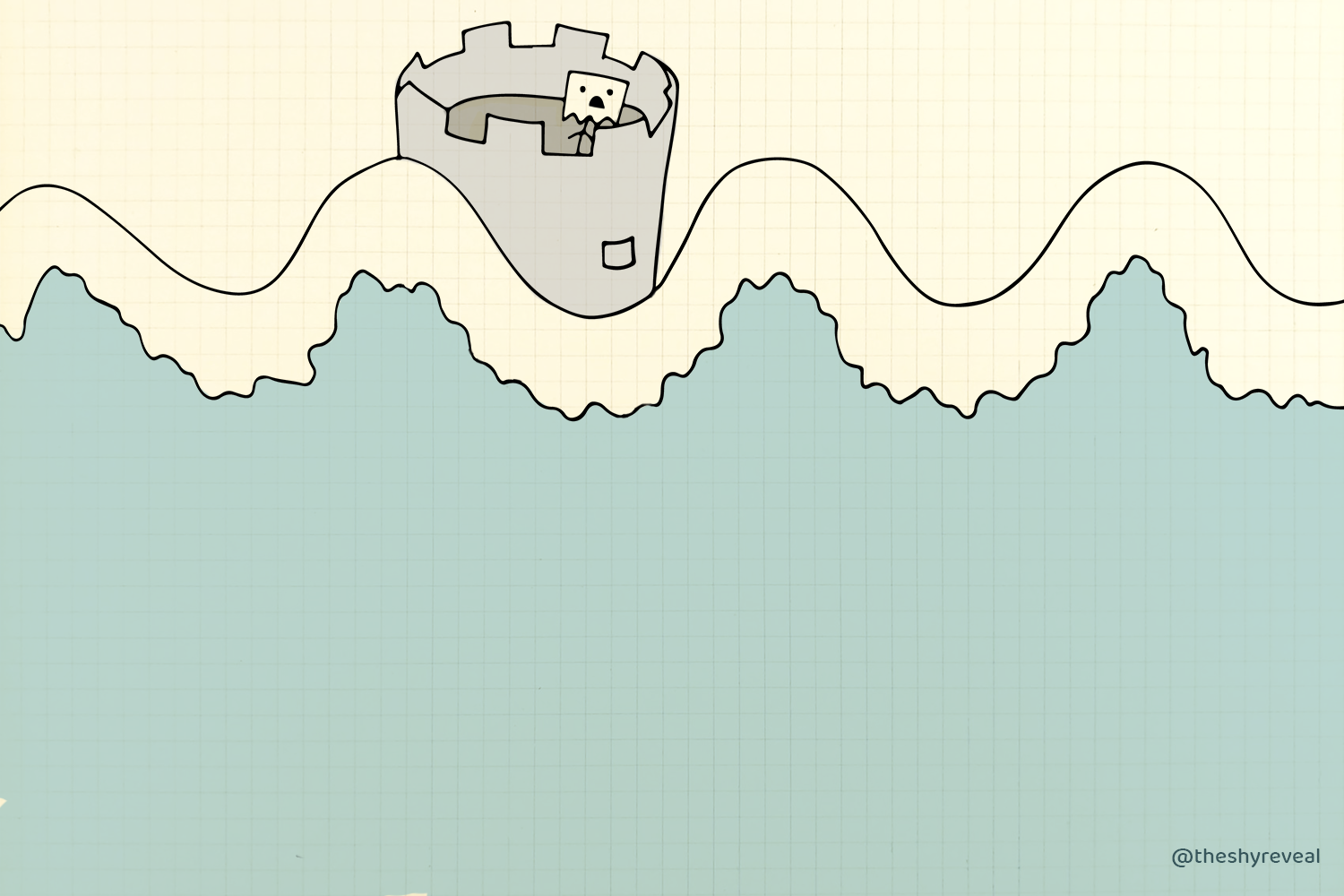
See where this is going?
Many of us keep our entire personality as a secret.
When that happens, you don’t even know who you are anymore:
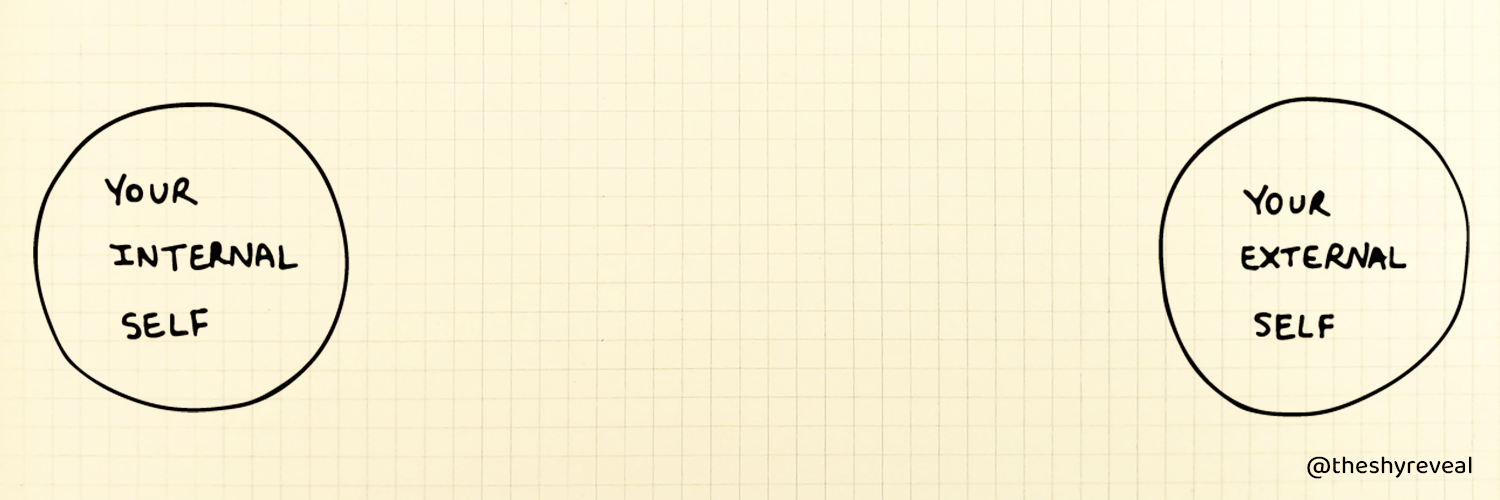
You’ve rejected your vulnerability so much that you’re only yourself when you’re by yourself.
Here comes the writing part.
My theory is that writers know, on a subconscious level, that they’re in the lonely tower. Many of us struggle with socializing, acting spontaneously, speaking while thinking. So naturally, we gravitate towards a slower pace of expression:
Writing.
We need to. It’s an urge.
If we don’t, we get mentally bloated.
All this overthinking needs to get out at some point.
Even when you procrastinate for years and years, the urge to write will hit you out of nowhere. That’s when you realize that being unseen hurts even more than being seen.
Because all you really wanted was to feel aligned.
You want your two circles to join, so you can truly be yourself.
And how do you do that?
By writing and showing it to the world.
Get Out of The Tower.
I know it takes guts.
I’m afraid people will judge my work for being too vulnerable.
The thing is, I write about decision-making struggles. I write about clumsy mistakes. Having an existential crisis. All these topics have something to do with self-doubt.
But of course, you don’t put that kind of stuff on your resume.
You don’t introduce yourself by saying: “Hey, I’m Paperbag and I’m passionate about self-doubt.”
You’re afraid of people thinking: “That’s weird. You should be interested in sports, movies, cooking…You know, normal stuff. You shouldn’t care too much about *insert anything that has to do with human nature, mindset, and introspection*.
But wait.
Would you be a writer if you thought the same as everybody else?
Maybe if you were more tolerant of your uniqueness, you’d let go of that lonely tower, and you’d finally act like yourself.
You’d finally say: “Yes, I’m a writer!” without an ounce of shame.
Thus follows…
The 5 Mental Shifts That Will Make You A Bit Less Fearful of Your Vulnerable Writing:
#1 It’s not about you.
You think people are reading you.
That’s the spotlight effect. You think it’s voyeurism, like you are exposing your soul on the screen.
The reason you feel that way is that you’re attached to your thoughts. You believe Me = Thoughts.
Is it true?
Most likely, your thoughts came from another person. You got inspired. Or you read a book that changed your perspective. Or you were taught a lesson when you were a kid. So are your ideas really yours?
Maybe your writing reveals nothing about you. Because your mind is constantly evolving. Go back to reading your articles from five years ago, and tell me if you still think 100% the same.
#2 Perfection makes you unrelatable.
All my life, I wanted to be perfect.
I thought the goal was to be liked by everyone (or at least, not hated).
Perfection is the absence of conflict. It’s like a corporate video of people happily shaking hands and having meetings like it’s the pinnacle of their life.
But writing needs conflict.
To paraphrase Bernard Werber, writing is a form of revenge against someone or something. Hence, a misery to solve.
And I agree.
I’m not saying you have to be a tortured emo. You can be happy, and you can write about joyful things. I’m convinced, however, that every writer carries a little dose of misery in them, if only 1%.
Because when you spend time alone, when you create fantasies, when you question reality…It means you wished reality was different in the first place.
So reality must be imperfect.
If you want your writing to be relatable (= vulnerable), think about conflict. Think about our imperfect world.
Above all, think about your imperfect self.
#3 Writing is meant to challenge the status quo.
“Art should comfort the disturbed and disturb the comfortable”
— Cesar A. Cruz
If you were to write about, say, carrot cakes…
Let’s say your main interest is carrot cakes.
Would you show it to your social circle? They might weirdly look at you, thinking: “What’s that obsession with carrot cakes about?”, but I bet it’s less vulnerable than writing about…whatever you’re going through.
I write about self-doubt because I’ve yet to find content I truly resonate with.
If you make something new, then yes, it’s going to be vulnerable.
If no one has done it before, and you’re thinking about it all the time…Then you were probably meant to do it. Someone out there might be looking for your specific experience.
Maybe you think some topics are too surface-level and need further exploration. Maybe you wish people cared more about it.
That’s your sign to dig deeper.
#4 Writing is not meant to be 100% authentic.
Think about the metaphors and hyperbole you use.
Think about the times you’ve corrected your writing, just to make it sweeter, funnier, or more dramatic.
It doesn’t have to be genuine.
Ironically, that’s why I enjoy writing. I can wear a mask, but I can also express myself at my own pace. It’s semi-vulnerability.
After all, writing is not a therapy session. It’s a craft. You’re being vulnerable, but you’re also being creative about it.
You could take so many memories, inspirations, and turmoils from your life. Mix them all, and here you go: A composition that will make people laugh, cry, enjoy their day…whatever you desire.
In the end, it’s not really self-exposure. It’s self-creation.
#5 We’ll be dead anyway.
Worst-case scenario is that you die.
When you die, you won’t remember your writing. You won’t worry about people thinking of you, or how much "vulnerability" you’ve injected into your prose.
But now you’re alive.
Every time you hit the publish button, it’s scary as death.
Remember: That’s a trap. Your brain wants to keep you safe in the lonely tower. But your heart wants out.
When you publish, you can tell yourself that it’s done.
You’re out of the tower. Your writing is not even yours anymore. It’s for the reader.
No more bloating.
Think Reader-First
Too often, we worry about ourselves:
“What will the reader think about me?”
How about we turn that question into:
“What will the reader think about themselves?”
When someone reads you, they’re going to feel something about their own life. They’re going to attach it to their frame of reference.
When we go to the library, we think: “What’s in it for me? Which book do I want to read? What is worth spending my Sunday morning?”
Readers care far more about your general theme (something that they also have in their life), rather than you being in the spotlight:
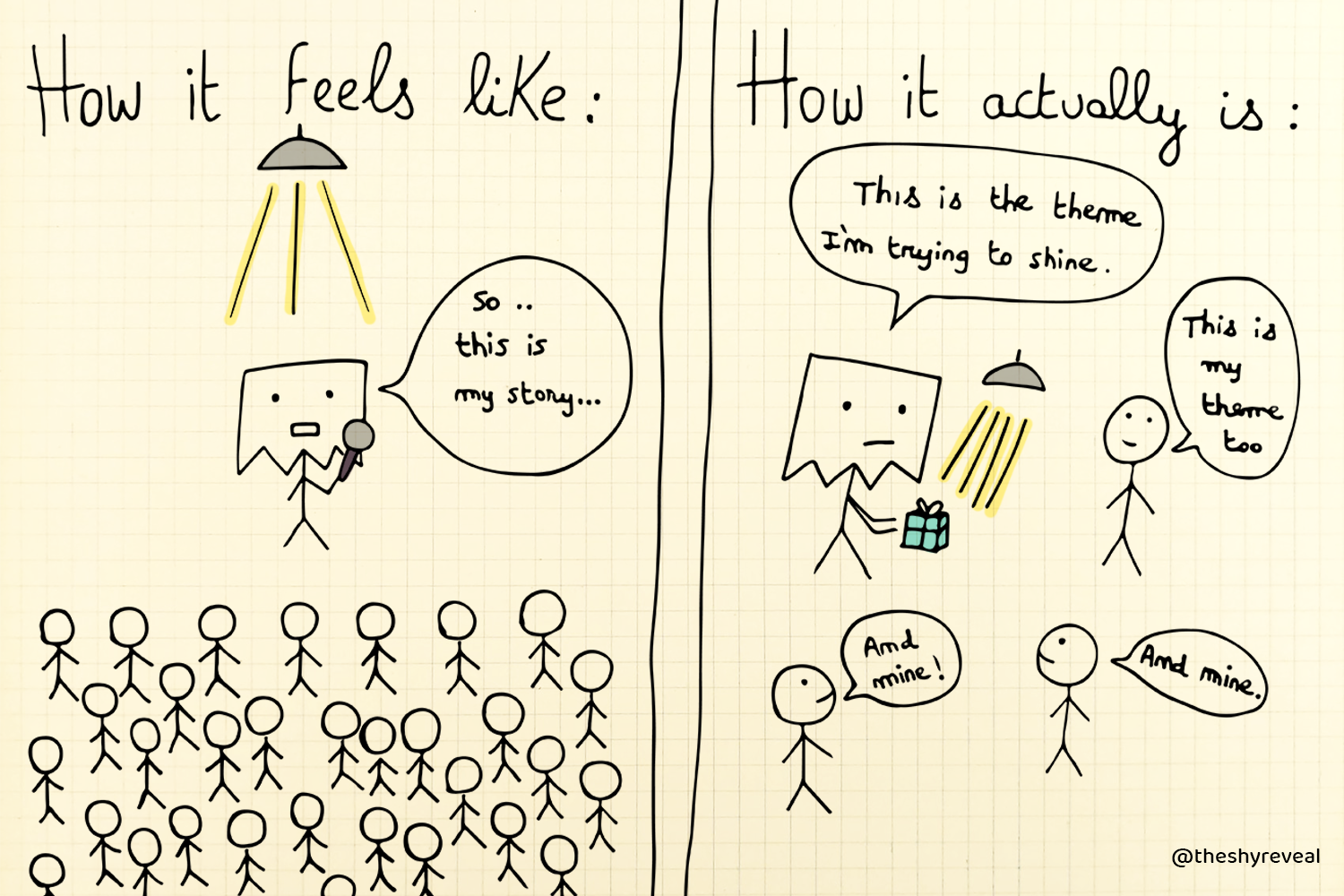
The theme (or the niche, as some say) is the blob of interests, challenges, and aesthetics that represent your work.
A theme attracts readers.
If you have the guts to make your theme shine, your reader will find you, and you will both have something in common.
Sometimes, that’s what we call a friendship.
You thought you’d be in that lonely tower forever, but eventually, you can be free.
Slowly, slowly, slowly…
I guess that’s the beauty of being vulnerable.
Thank you for reading! ✿
A little note:
In the past few months, I received many comments of people saying they related to my stories. Honestly, I feel so grateful. Your understanding and appreciation of ‘the shy reveal' means the world to me.
So thank you :’)